
A second principal London, born around 1960, whose working years overlapped with the younger dogs.
Chuck Eisenmann and his dogs
The dogs behind the Hobo story
To viewers, Hobo seemed to be one remarkable traveller. Behind him was a changing family of dogs who lived with Chuck, learned alongside one another and shared the work over many years.
On this page
Meet the family, through the years.
Where it began
It began with London
London changed the course of Chuck Eisenmann’s life. Their partnership grew through baseball, public appearances and film, until the German Shepherd became the first dog to play Hobo on screen.
He was not simply the start of a succession. He was the older dog at the centre of a household in which younger dogs watched, learned and found places of their own.
Read London’s storyTogether
A family of performers
As London grew older, younger dogs joined the household, learned alongside him and began to share the work.
They travelled with Chuck, appeared before live audiences, worked in films and television, and returned to the same life together when the performance was over.
BallparksOn the roadFilm setsTelevision studios
Reported family ties
The early family
Newspapers of the time described London as the father of Thorn, Toro, Little London and London Jr. Those reports give the family its clearest early shape, although the full breeding records have not been found.
Where it beganOriginal London
Early sonThorn
Early sonToro
Early sonLitlonLittle London
Early sonLondon Jr.
Reported sonSuccessor LondonBorn about 1960
Reported relationships from contemporary accounts. Full pedigree records have not been found.
Early Lance and Hobo also belong to this wider story, but the surviving accounts do not place either dog securely on this branch.
A name across generations
More than one London
The name continued because London had become familiar to audiences. The surviving record also shows that the dogs’ working years overlapped. This was a family changing gradually, not one dog simply replacing another overnight.
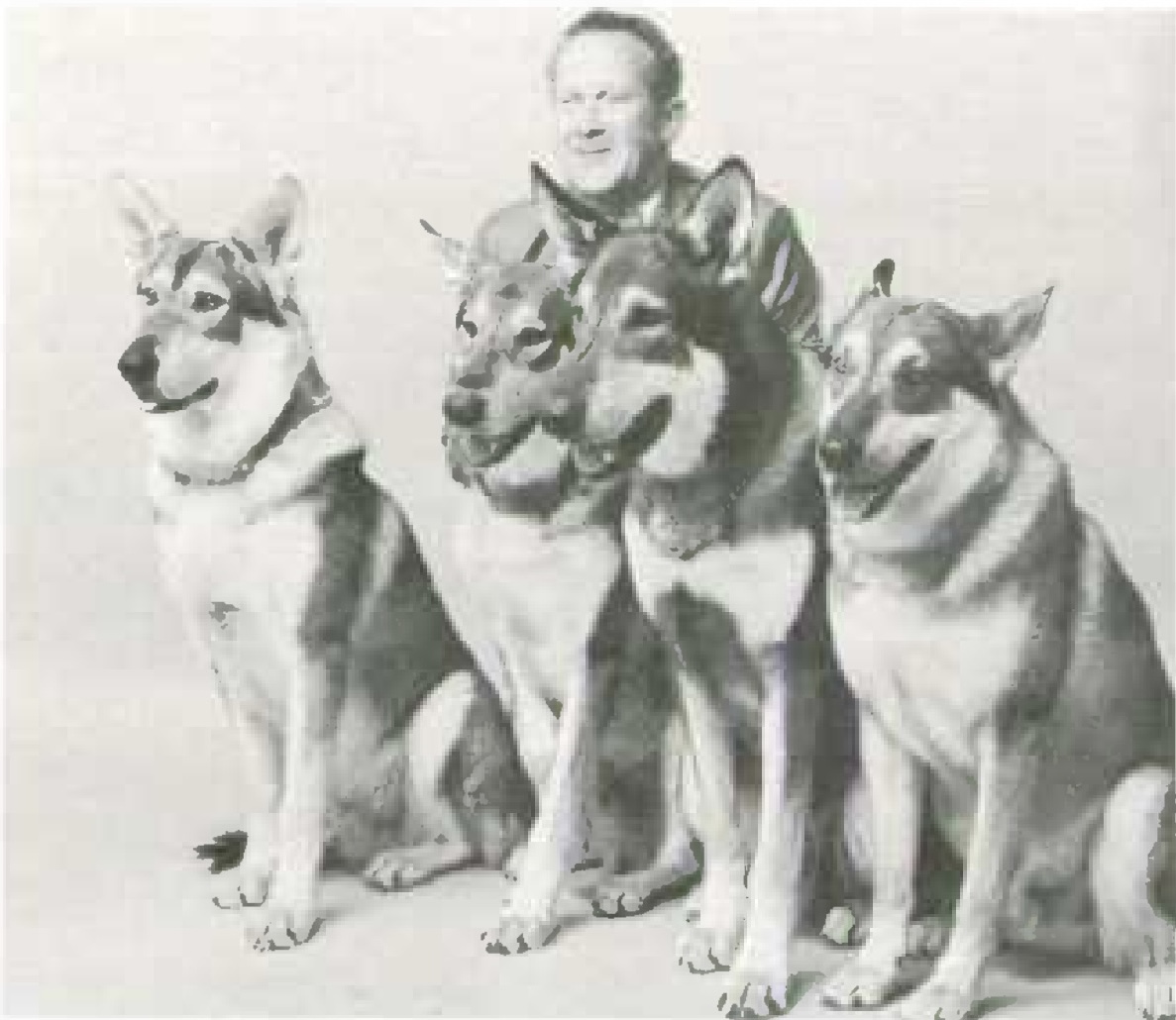
London with three stand-ins, pictured in Canada 1964. The publication does not identify the three stand-ins individually.
Adapted from Statistics Canada, Canada 1964, 1964. This does not constitute an endorsement by Statistics Canada of this product.Original London
1955–66
Public record, not a claimed lifespanSuccessor London
1964–74
Born about 1960London Jr.
1963–72
The younger London documented across the 1960s and early 1970sTravelling together
Life on the road
Much of the dogs’ working life happened far from a studio. They crossed North America with Chuck in a station wagon, visiting department stores, theatres, newspaper offices and local shows. People who knew only one Hobo from television could suddenly meet several dogs, each answering to his or her own name.
The road also joined one generation to the next. Older dogs could demonstrate settled routines while younger dogs learned what was expected in busy rooms, before unfamiliar crowds and in the long hours between stops.
The next travelling group
The family grows
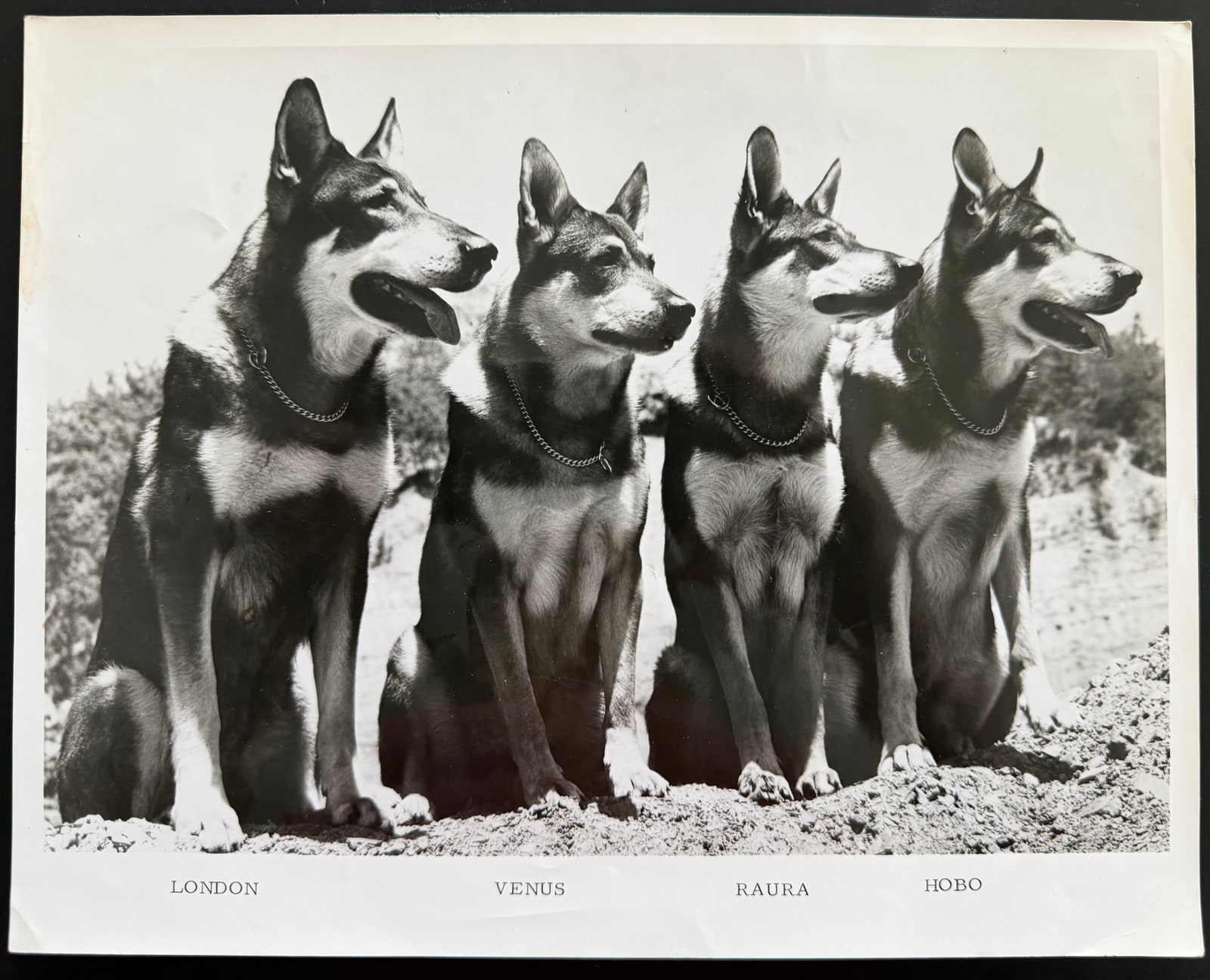
By 1970, contemporary reports name London, Hobo, Venus and Raura travelling with Chuck. Hobo had joined the family as a young dog in the late 1960s and remained part of Chuck’s life into the following decade, while Venus and Raura belonged to the younger travelling group seen with him around 1970 and 1971.
Exactly which London travelled with them is harder to establish. The London seen in the early 1970s was probably one of the younger generation, but earlier appearances could belong either to him or to the older successor London. What matters more to the story is that several generations were now living and travelling together.
One character, several dogs
Who played Hobo?
The honest answer changes with the year. The original London began the screen story. In the early television series, younger dogs including Thorn, Toro, Litlon and a younger London shared the role. Later productions brought another generation.
Publicity often called the performer London because that was the name audiences knew. Away from that shared identity, the dogs were individuals. Each had a place in a family that changed over the years, as one generation aged and the next came along to learn beside them.
Follow the screen history1979–85
A new generation
When The Littlest Hobo returned to television in 1979, a new working team carried the familiar character forward.
A photograph caption from June 1981 names London, Bo, Toro, Lance and Thorn. It describes London as the dog then used in most scenes, with the others standing in. That is a clear view of the team at one moment, not a complete account of how the work was divided across all six seasons.
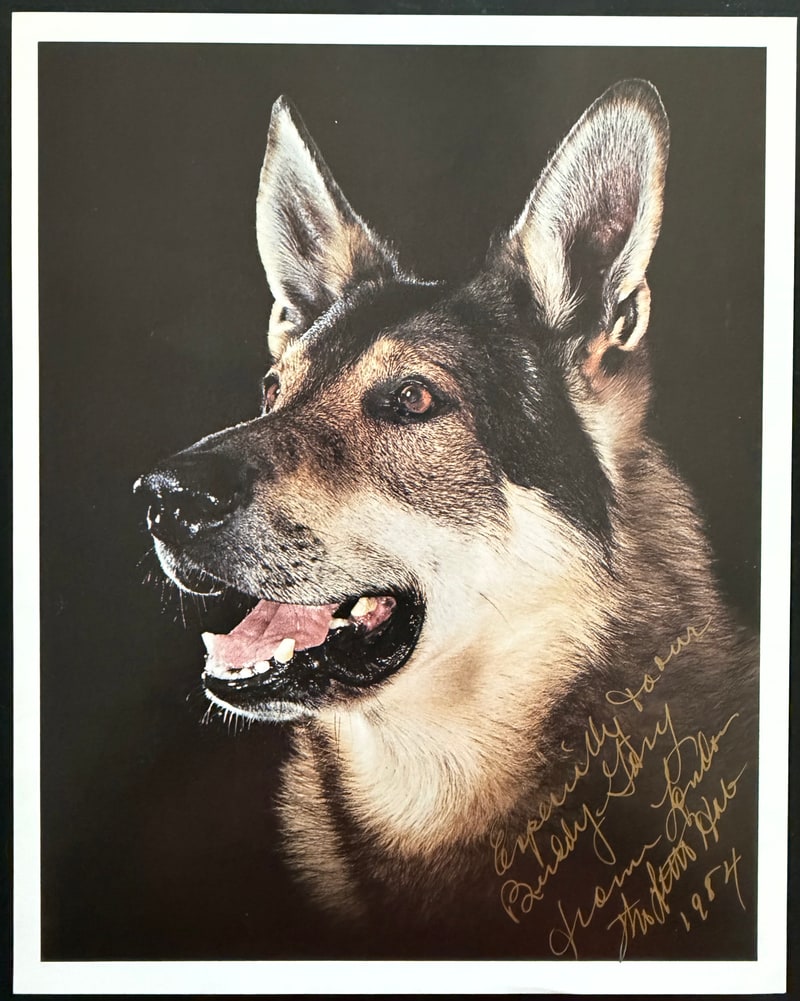
LondonUsed in most scenes at that dateBo / BeauMajor Hobo performerToro1981 television teamLance1981 television teamThorn1981 television team
By 1987, contemporary reporting described Beau, very probably the Bo named in 1981, as having starred in most episodes of the series. Whatever the exact division of work between the dogs, he was clearly an important part of the television team.
By 1987 Chuck was back near Roseburg with Beau, London and younger dogs named Lance and Toro. Lance was about eighteen months old and Toro only ten months, so they were another generation carrying familiar names. The television series had ended, but the family of dogs around Chuck was still changing.
Read about Chuck’s later yearsAt home with Chuck
More than performers
Films, demonstrations and astonishing routines made the dogs famous, but they were also Chuck’s everyday companions. They lived, travelled and grew older around him. His books are full of ordinary moments as well as performances: meals, walks, rivalries, mistakes, play and the patient business of learning together.
Generations of viewers have come to know Hobo through television, including people born long after the dogs’ own lifetimes.
The character lasted because the dogs made him feel alive. Their own story is quieter and more personal: generations of dogs sharing one man’s home and work, each adding something to what the next generation inherited.
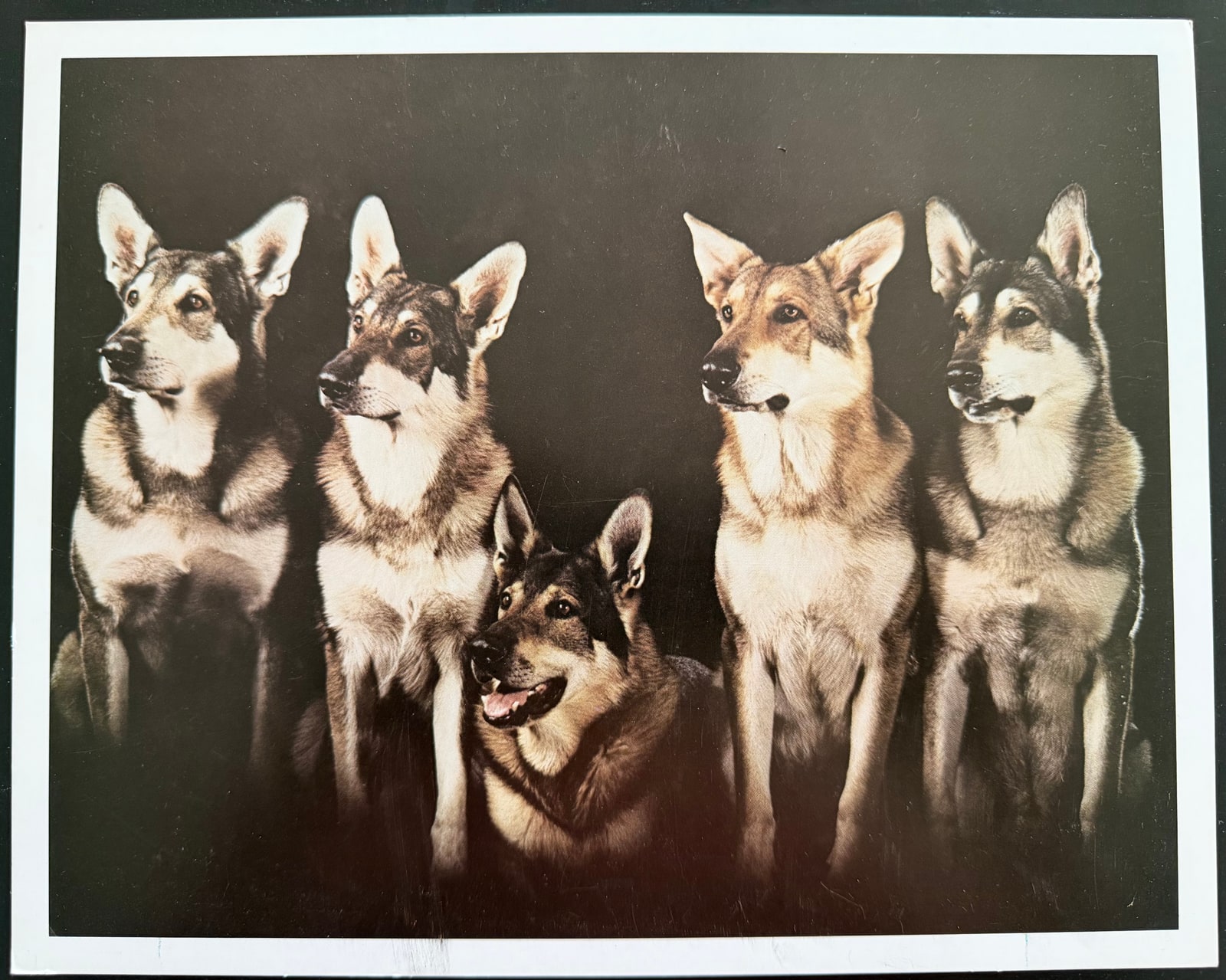
Names across the years
Meet the family
The same names sometimes returned in a later generation. They are kept separate here so that an early Toro, Lance or Thorn is not mistaken for a dog working decades later.
01Where it began
02The early family
ThornSuccessor London Lance · 1961 publicity
An adaptable early performer who travelled, demonstrated and took on specialist screen work.
Read more Toro · born c.1960–61A familiar member of the first television team, sometimes introduced to audiences as London.
Read more Little London / LitlonA younger early performer remembered for his eagerness and work beside the other dogs.
Read more London Jr.A younger London who learned within the early group and continued into the next part of the story.
Read moreA young dog remembered for a safely completed parachute jump during film publicity in 1961.
03Life on the road
The Hobo traced through appearances from about 1968 to 1974, separate from the use of Hobo as a screen name.
A young member of the touring group seen with Chuck in 1970 and on television in 1971. She may be the same Venus Chuck had written about a few years earlier.
Another young travelling dog whose name survives with more than one spelling.
04A new television generation
Named in 1981 as the dog then used in most scenes of the revived series.
A major Hobo performer, named Bo in 1981 and spelled Beau in later contemporary reports.
A member of the revival team, kept distinct from earlier and later dogs called Toro.
A member of the revival team, separate from the young Lance reported in 1961 and the later household dog.
A member of the revival team, separate from Chuck’s early dog Thorn.
05Later years
By 1987, Chuck was living near Roseburg with Beau, London and younger dogs again named Lance and Toro.
Reported as thirteen years old. He may have been the London named in 1981, but that has not been established.
About eighteen months old in early 1987, and therefore another dog carrying a familiar name.
Only ten months old in early 1987, and distinct from the Toro of the television team.
A German Shepherd Chuck kept as a companion after he stopped working professionally with dogs.
Their story continues
What remains
All of these dogs are gone now, and Chuck is gone too. What remains are their images moving across television screens, photographs taken during their lives, Chuck’s books and his voice on a record, newspaper stories, and the memories of people who were fortunate enough to see them in person.
Those fragments cannot recreate the household that once travelled together, learned together and grew older together, but they allow us to recover something of it. London, Thorn, Toro, Litlon, Hobo, Venus, Raura, Bo and the others were more than names attached to a television character. Each had a place in a family that changed over the years, as one generation aged and the next came along to learn beside them.
To the audience there was simply Hobo, but behind that familiar character stood a family of dogs who had learned, travelled and worked together.
Sources used on this page
- “The Littlest Hobo” Dogs in Canada / Canadian Kennel Club, March 1967
- Canada 1964, p. 124 Dominion Bureau of Statistics, 1964
- “Have Dogs, Will Bark” Dwight Newton, San Francisco Examiner, 24 June 1964
- Eisenmann touring-group report Waterloo Region Record, 19 August 1970
- “In the wings…” photograph and caption Al Dunlop / Toronto Star, 5 June 1981
- Roseburg reports on Chuck and four dogs Statesman Journal, Spokesman-Review and The Columbian, 1987
- Chuck Eisenmann later-life profile Mia Simpson, Roseburg News-Review, 18 August 2006
The audience saw Hobo.
Behind Hobo stood a family.