
Just Between Us
Just Between Us was a real, completed 84-minute American feature made by Pax Films and released in 1961. Its principal canine performer was billed publicly as London. In the story, London takes over a young girl’s dog-sitting job and tries to recover six missing dogs.
The work was shared across the team. Thorn performed the aircraft-wing action, while Toro made the dramatic trestle-to-moving-truck jump. Early Lance made a parachute jump as publicity for the film. The picture had regional theatrical exhibition, and a VHS transfer from an original 35mm print was known to exist, although nobody has yet located it.
Marks of Distinction
In 1960, contemporary publicity reported that Chuck was taking London, Thorn and Toro to Hollywood to begin a production called Marks of Distinction. Later publicity also included the title among London’s screen work.
What became of the production remains one of the more intriguing gaps in the story. A finished release title has not yet turned up, but the announcement shows how seriously film work had become part of Chuck’s plans.
Silent Friends
In 1969, Chuck and his dogs became part of a Romanian–Canadian adventure far beyond the familiar Hobo world. Silent Friends, released in Romania as Prieteni fără grai, follows two dogs and a duck helping children escape from danger. It was directed by Paul Fritz Nemeth and Gheorghe Turcu.
A July production report credits Chuck with the story idea and describes how closely the dogs depended on him during filming. It names London and Toro as the principal canine performers, with Hobo in a smaller role. When the finished film reached Bucharest’s Republica cinema on 22 December 1969, the following day’s premiere report also named Charles Eisenmann among the cast.
The dogs made an impression of their own. Reviewing the film in January 1970, Ioana Popescu praised London and “Torro” — her spelling — even while finding fault with the film around them. The 1971 Gijón festival catalogue and a contemporary Variety review both name Toro and London. Later accounts give different names and family relationships, so we cannot yet say securely which individual dogs carried each familiar name in this production.
A film with many names
The adventure travelled under several titles: Silent Friends in English, Deux amis silencieux in French, Únosci in Czechoslovakia and Niezawodni przyjaciele in Poland. Its posters offered quite different invitations to the same story — a commanding canine star, a reassuring family outing, a rescue adventure or a burst of illustrated comedy.
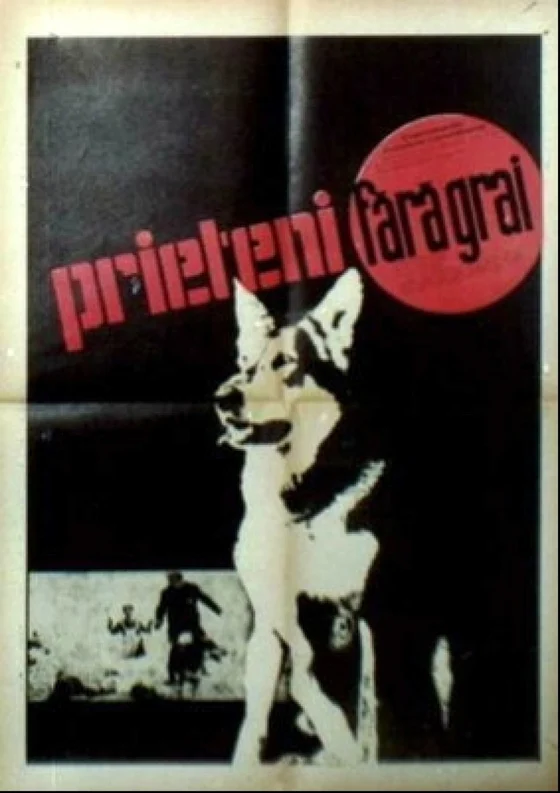
The towering dog and bold red lettering make the canine star the centre of attention.
Reproduction: TVR.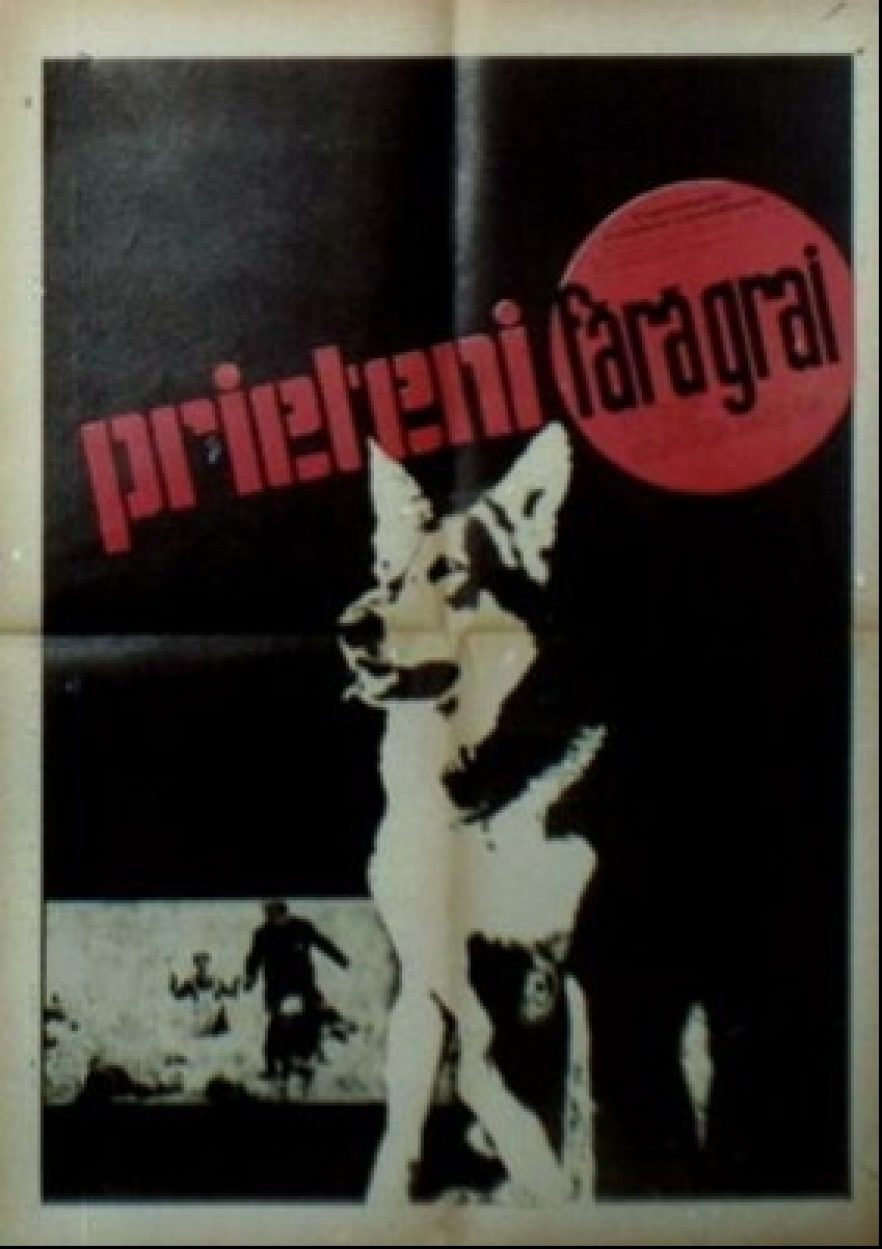
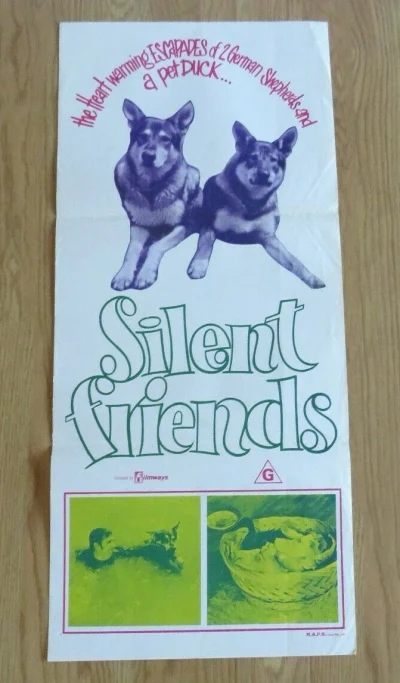
Gentle colours and the paired dogs promise a warm family adventure.
Cinema daybill. Image: NO 1 RETRO SHOP / eBay.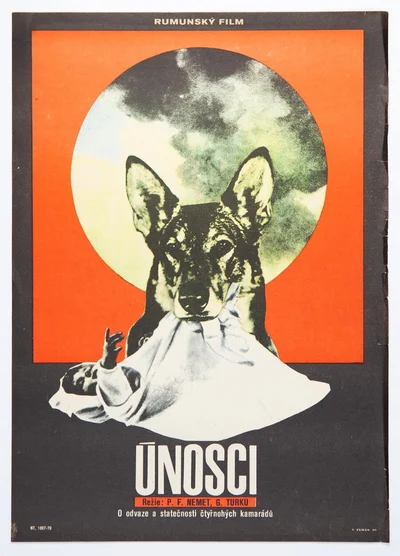
The looming dog, orange field and baby’s basket bring the rescue story forward.
Václav Zeman, 1970. Saved eBay reproduction; Artia catalogue.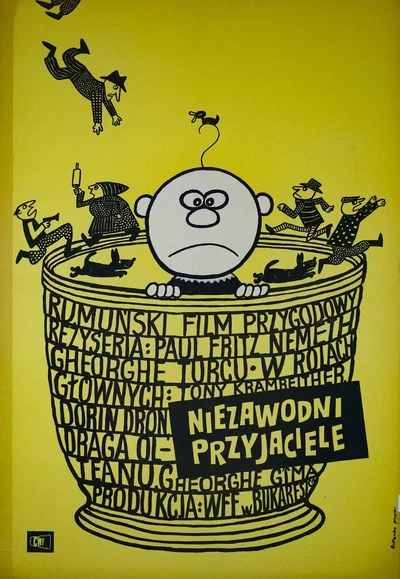
Butenko turns the adventure into lively line drawing, with the lettering part of the joke.
Bohdan Butenko, 1970. Reproduction: IMDb; artist’s gallery.The film’s travels extended further still. Finland’s national catalogue records a 1975 release as Hiljaiset ystävät. In China, 沉默的朋友 — “Silent Friends” — appears in Shanghai’s 1974 dubbing list, while a 1980 newspaper account reports screenings during Romanian Film Days. These are different chapters in its journey, rather than one international release date.
Dogs to the Rescue also survives on an English title card. Exactly how the different versions relate remains a story to piece together. If you remember the film, or have programmes, stills, clippings or production material, please contact contact@thehobostory.org.